Nothing Wasted, Everything Gained: How Indie Soap Makers Are Turning Scraps Into Something Special
Every bar of handmade soap starts with intention — carefully weighed oils, hand-measured lye, fragrance blended drop by drop. But once a loaf is cut and the edges are beveled smooth, something gets left behind. Shavings. Slivers. End pieces that are too small to sell as full bars but too good to throw away.
For a long time, those scraps just piled up. Some makers tossed them. Others let them accumulate in a drawer, vaguely hoping inspiration would strike. But a growing number of indie artisans across the US have decided that waste simply isn't an option — and what they're creating from those leftovers is genuinely impressive.
The Scrap Pile Problem (And Why It's Bigger Than It Looks)
Handmade soap production is, by nature, a little imprecise. Unlike factory-stamped bars that emerge identical every time, small-batch soap is cut by hand, beveled with a tool or a peeler, and sometimes trimmed to fix uneven tops or crumbly edges. Depending on the maker's process, anywhere from 5 to 15 percent of a batch can end up as unusable scraps.
For a home hobbyist making a few loaves a month, that's not a huge deal. But for indie brands fulfilling hundreds of orders, it adds up fast — in wasted materials, lost revenue, and unnecessary landfill contribution. Natural soap ingredients aren't cheap. Shea butter, kokum butter, specialty oils — these aren't things you want to watch go in the trash.
That tension between craft and waste is exactly what's pushing makers to get creative.
What Makers Are Actually Doing With the Leftovers
The solutions coming out of small-batch studios are genuinely clever, and they span a pretty wide range of products.
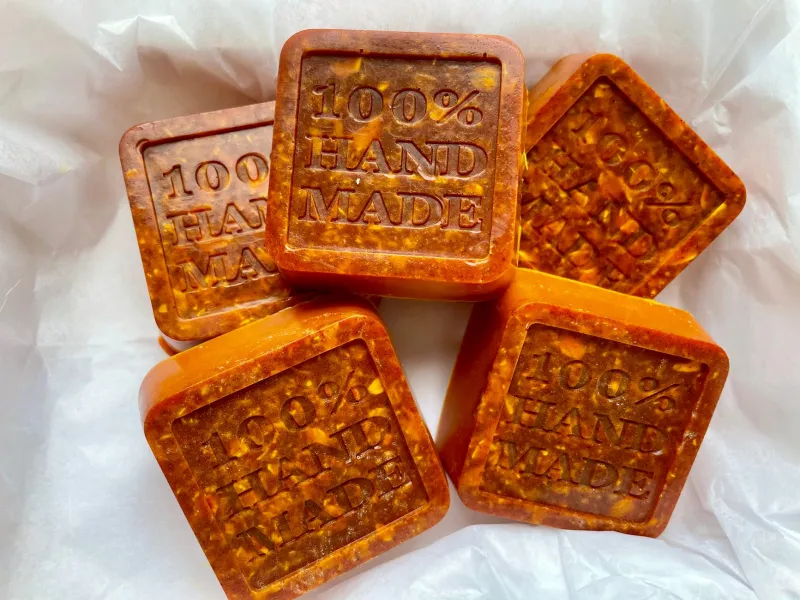
Exfoliating rebatch bars are probably the most common. Soap scraps are grated or chopped, melted down with a bit of added liquid, and repressed into new bars. Makers often fold in extras at this stage — ground oats, poppy seeds, coffee grounds, dried herbs — turning what was essentially a byproduct into a textured scrub bar that sells for a premium. The rebatch process can actually improve certain qualities, making the soap milder and more moisturizing because it's already fully cured.
Soap powder and soap flakes are another popular route. Scraps are dried completely and then either grated fine or run through a food processor to create a loose powder that works beautifully for laundry, hand washing, or even as a gentle body scrub when mixed with a carrier oil. Several indie makers have turned this into a standalone product line — packaged in kraft paper bags or glass jars, it looks nothing like a byproduct.
Solid shampoo bars made from soap scraps are a newer development, and a particularly interesting one. Some makers are blending their leftover soap base with conditioning agents and proteins to create hair care bars. It's a more technically complex process, but the results can be genuinely great for certain hair types — and the sustainability angle resonates strongly with customers who are already trying to cut down on plastic in the shower.
Soap sacks and mesh bags filled with mismatched scraps have also become a low-effort, high-charm option. Toss in a handful of leftover pieces, cinch it closed, and you've got a built-in loofah situation. It's simple, it's cute, and customers love the grab-bag element of not knowing exactly which scents they'll get.
The Makers Leading the Charge
Talk to any artisan who's been making soap for more than a couple of years, and most of them have a version of this story: the moment they realized they couldn't keep throwing good ingredients away.
One maker based in Portland described her turning point as a batch of holiday soap that didn't turn out quite right — the swirl pattern went sideways, and the bars weren't sellable as her signature line. Instead of scrapping the whole thing, she grated it down, mixed it with oatmeal and a little extra coconut oil, and pressed it into rustic rounds. She listed them as "imperfect bars" at a slight discount. They sold out in two days.
Another small-batch brand out of Austin has built an entire secondary product line around what they call their "remnant collection" — soap powders, bath salts blended with soap flakes, and exfoliating bars. It now accounts for a meaningful chunk of their revenue, and it's become a selling point rather than an afterthought.
What these makers share is a mindset shift: scraps aren't a problem to manage, they're a resource to use.
How to Spot a Zero-Waste Soap Brand Worth Supporting
Not every brand that uses the word "sustainable" is actually walking the walk. If you want to support makers who are genuinely committed to reducing waste, here are a few things to look for.
Transparency about process. Brands that are serious about zero-waste practices tend to talk about it openly — on their website, in their product descriptions, on social media. Look for makers who explain how they're using scraps, not just that they care about the environment.
A secondary or remnant product line. If a brand sells something like soap powder, rebatch bars, or "odds and ends" bundles, that's a good sign they're thinking creatively about waste. It's easy to throw away scraps. It takes effort to turn them into something sellable.
Minimal, compostable, or recyclable packaging. Zero-waste soap brands usually extend that philosophy beyond the soap itself. Kraft paper wraps, paper labels, cardboard boxes — these are all signals that the brand is thinking holistically.
Honest "imperfect" offerings. Some makers sell bars that didn't turn out quite right cosmetically — maybe the color isn't consistent or the top is a little rough — at a reduced price. This is a great sign. It means they're not tossing product just because it doesn't look perfect, which takes real integrity.
How You Can Join the Movement
You don't have to be a soap maker to participate in this. As a customer, your purchasing choices have real weight.
Buy the remnant bars. Grab the soap powder. When a brand offers an "imperfect" bundle, consider it — those bars work just as well as the pretty ones, and buying them tells the maker that their waste-reduction efforts are valued.
If you do make soap at home, start collecting your own scraps intentionally. Keep a jar or a zip-lock bag in your soap studio and let the pieces accumulate. When you've got enough, try a simple rebatch or run them through a cheese grater for homemade soap powder. It's satisfying in a way that's hard to explain until you've done it.
And maybe most importantly: talk about it. Share the brands you love that are doing this well. Sustainability in the handmade soap world grows through word of mouth, and every conversation you have about zero-waste beauty nudges the industry a little further in the right direction.
The scrap pile doesn't have to be a problem. In the right hands, it's just the beginning of something new.