What's Coming Out of Your Faucet Is Quietly Running Your Shower Routine
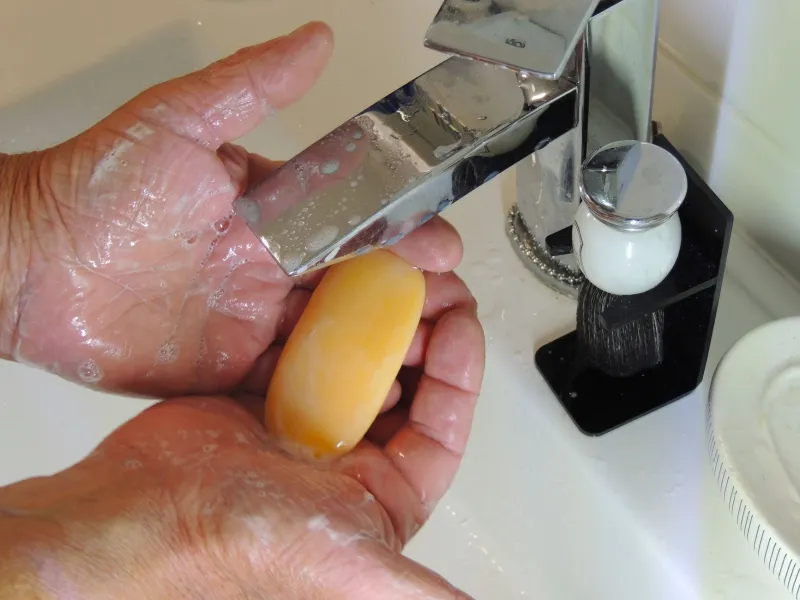
You switched to a beautifully crafted handmade bar. You ditched the synthetic body wash. You're doing everything right — and yet your skin still feels tight after a shower, or your soap isn't lathering the way you expected. Sound familiar? Before you blame the soap, take a closer look at your water.
Across the United States, water quality varies wildly from city to city, even neighborhood to neighborhood. That invisible chemistry is doing a lot of heavy lifting (or not) every time you step into the shower. Understanding what's actually coming out of your faucet is one of the most underrated things you can do for your skin and your soap.
Hard Water vs. Soft Water: What's the Actual Difference?
At its simplest, the distinction comes down to mineral content. Hard water is loaded with dissolved calcium and magnesium ions, picked up as rainwater moves through limestone and chalk deposits underground. Soft water, on the other hand, has had most of those minerals removed — either naturally (like rainwater that travels through granite) or through a water softening system.
The US Geological Survey has mapped this out pretty clearly: states in the Midwest, Southwest, and Great Plains tend to have some of the hardest water in the country. Think Phoenix, Las Vegas, Dallas, and Indianapolis — cities where mineral deposits are high and water treatment doesn't always strip them out. Meanwhile, the Pacific Northwest, parts of New England, and the Southeast often enjoy naturally softer water. Cities like Seattle, Portland, and Atlanta sit on the softer end of the spectrum.
If you've ever moved across the country and noticed your skin or hair behaving completely differently, water hardness is probably a big reason why.
Why Hard Water and Handmade Soap Don't Always Get Along
Here's where things get interesting from a chemistry standpoint. When the fatty acids in soap (the good stuff that does the actual cleansing) meet the calcium and magnesium ions in hard water, they don't dissolve — they bind together. What you end up with is soap scum: that grayish, waxy film that clings to your tub, your skin, and your shower walls.
This reaction also dramatically reduces lather. Instead of that rich, creamy foam you're expecting from a high-quality handmade bar, you get a thin, almost slimy layer that rinses off quickly without doing much. It's not the soap's fault. It's chemistry.
For your skin specifically, hard water can be rough in the most literal sense. The mineral buildup left behind after rinsing can disrupt your skin barrier, leading to dryness, irritation, and that uncomfortable tight feeling. People with eczema or sensitive skin often notice flare-ups correlate directly with water hardness.
Soft Water: Better Lather, But a Different Set of Quirks
Soft water is generally friendlier to soap. Lather comes easier, rinses cleaner, and your bar lasts longer because you're not fighting mineral interference. But soft water comes with its own learning curve.
Because it lacks those minerals, soft water can feel almost too slippery. That sensation of soap not rinsing off completely? That's normal with soft water — it's not residue, it's just the absence of the friction minerals create. Some people actually use more soap than necessary because they assume they haven't used enough, when really a little goes a long way.
Skin can also feel slightly more sensitive to product ingredients in soft water, since there's less of a mineral buffer. If you're in a soft-water region and your skin tends to react to new products, that's worth keeping in mind.
Regional Breakdown: Where Does Your City Fall?
Here's a rough guide to help you get your bearings:
Very Hard Water Zones:
- Phoenix, AZ
- Las Vegas, NV
- San Antonio, TX
- Denver, CO
- Indianapolis, IN
- Minneapolis, MN
Moderately Hard Water Zones:
- Chicago, IL
- New York City, NY (surprisingly variable by borough)
- Miami, FL
- Kansas City, MO
Soft to Moderately Soft Water Zones:
- Seattle, WA
- Portland, OR
- Boston, MA
- New Orleans, LA
- Atlanta, GA
If you're unsure where your area falls, your local water utility is required to publish an annual water quality report (sometimes called a Consumer Confidence Report). It'll list hardness levels, usually in grains per gallon (GPG) or milligrams per liter (mg/L). Anything above 7 GPG is considered hard; below 3.5 GPG is soft.
Practical Tips for Hard-Water Households
If you're dealing with hard water, a few adjustments can make a big difference:
Use a little less soap, and work up lather in your hands first. Rather than rubbing the bar directly on your skin, build foam between your palms and apply that. It's more efficient and helps the soap do its job despite the mineral interference.
Look for soap bars with a higher coconut oil content. Coconut oil-based soaps are known for their ability to lather even in hard water, making them a smart pick for folks in Phoenix or Denver.
Consider a showerhead filter. These are relatively inexpensive and can reduce mineral content enough to noticeably improve your lather and skin feel. Some even filter chlorine, which is another common skin irritant.
Rinse with a diluted apple cider vinegar spray. Sounds a little out there, but the mild acidity helps dissolve mineral deposits left on your skin. It's an old-school trick that genuinely works.
Practical Tips for Soft-Water Households
If you're in a soft-water zone, your approach can be a bit more relaxed:
Use less product than you think you need. Seriously. A small amount of a good handmade bar goes further than you'd expect in soft water.
Opt for bars with a balanced oil profile. Softer, more conditioning oils like shea butter, olive oil, or avocado oil shine in soft-water environments, delivering extra moisture without the heaviness.
Don't mistake the slippery rinse feeling for uncleaned skin. You're clean. That's just what soft water feels like.
The Bottom Line
Your water is part of your skincare routine whether you've thought about it or not. A handmade bar crafted with real, purposeful ingredients is already a step above mass-produced alternatives — but pairing it with an understanding of your local water chemistry takes things to another level entirely.
At Alada Soap, we think about the full picture when it comes to your skin. The ingredients in our bars are chosen with care, but we also know that what happens when those ingredients meet your water matters just as much. A little knowledge goes a long way — and your skin will thank you for it.