Lather and Wind Down: Why the Soap You Use at Night Could Be Messing With Your Sleep
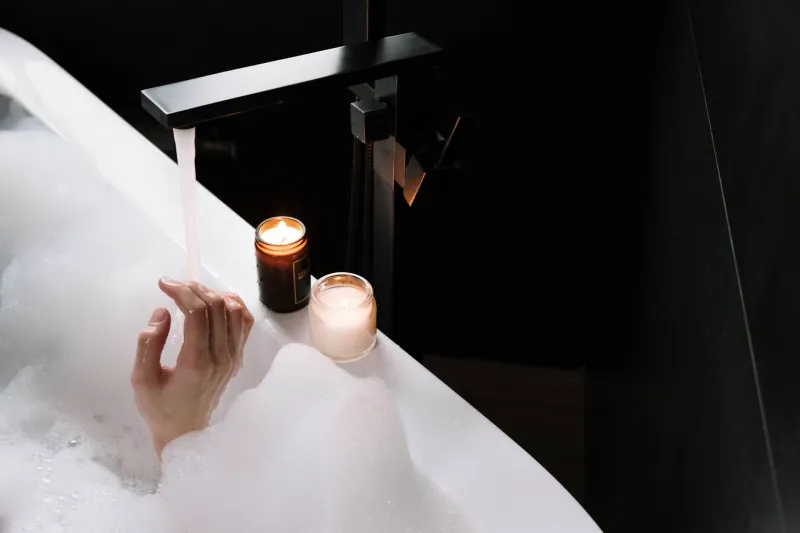
Most people put a lot of thought into their sleep setup. Blackout curtains, white noise machines, the right pillow, the perfect room temperature. But there's one element of the pre-sleep routine that almost nobody thinks twice about: the soap they use before bed.
It sounds minor. It probably isn't.
Scent is one of the most direct pathways into the brain's limbic system — the region responsible for emotion, memory, and arousal. What you smell in those final minutes before your head hits the pillow can genuinely influence how quickly you fall asleep, how deeply you sleep, and how your skin repairs itself overnight. And if your evening soap is loaded with energizing fragrance compounds, you might be sending your nervous system exactly the wrong signal.
The Neuroscience of Scent and Sleep
Here's a quick look at what's happening in your brain when you smell something. Scent molecules travel through the nose to the olfactory bulb, which has a direct connection to the amygdala and hippocampus — the parts of the brain tied to emotional response and memory. Unlike other senses, smell doesn't have to pass through the brain's rational processing center first. It's immediate and visceral.
Certain aromatic compounds have been studied for their effect on the nervous system. Linalool, found in lavender, has been shown in multiple studies to reduce anxiety markers and promote a calmer physiological state. Geraniol, present in rose geranium, has similar relaxing properties. Meanwhile, compounds like limonene (dominant in citrus oils) and 1,8-cineole (the main compound in eucalyptus and many mints) are associated with increased alertness and cognitive activation.
None of this means citrus or peppermint soap is bad. It means timing matters — a lot.
The Energizing Oils You're Probably Using at Night
Take a look at your bathroom shelf and count how many soaps or body washes have any of the following in the scent profile:
- Peppermint or spearmint — The menthol in these oils is a known stimulant. Studies have associated peppermint aroma with increased alertness, reaction time, and even athletic performance. Great for a morning shower. Less great when you're trying to drift off.
- Lemon, grapefruit, or sweet orange — Citrus scents are mood-lifting and energizing, largely due to limonene. They're bright and cheerful for a reason — they signal wakefulness.
- Eucalyptus and tea tree — Both contain compounds that open airways and increase mental clarity. Wonderful for congestion or a morning pick-me-up; not ideal when you want your brain to slow down.
- Rosemary — This one surprises people. Rosemary has a rich, herbal scent that feels cozy, but it's consistently associated in research with improved memory and alertness. It's an energizer in disguise.
If your nightly soap contains any of these, it's worth experimenting with swapping them to your morning routine and seeing how your evenings change.
Scents That Actually Support Wind-Down
The good news is that the world of natural fragrance has plenty to offer for an evening routine. Some of the most effective calming scents for nighttime use include:
Lavender — The most well-studied calming essential oil. True lavender (Lavandula angustifolia) is the gold standard for sleep support. It's gentle enough for sensitive skin and genuinely effective at promoting relaxation.
Chamomile (Roman or German) — Both varieties have a soft, slightly sweet, apple-like scent. Roman chamomile in particular is associated with reduced anxiety and easier sleep onset.
Sandalwood — Warm, woody, and grounding. Sandalwood has been used in meditation practices for centuries, and research supports its mild sedative-adjacent properties.
Vetiver — Earthy and deep, vetiver is one of the most underrated sleep-supportive scents. It's sometimes called "the oil of tranquility" in Ayurvedic traditions, and it pairs beautifully with lavender in a soap formulation.
Clary sage — Not to be confused with regular sage (which is more stimulating), clary sage has a soft, slightly herbaceous scent that's associated with reduced cortisol levels and a calmer mood.
When you're shopping for a handmade soap specifically for evening use, look for bars that feature these ingredients prominently — and check that synthetic fragrance oils aren't being used in their place. A soap labeled "lavender scented" with synthetic fragrance doesn't carry the same aromatic chemistry as one made with true lavender essential oil.
Your Skin at Night: Why the Soap You Choose Matters Even More After Dark
There's another layer to this conversation that goes beyond scent. Your skin has its own circadian rhythm. Cell turnover, collagen repair, and moisture recovery all happen predominantly at night. The skin's barrier is slightly more permeable in the evening hours, which means what you put on it — or strip away — before bed has a bigger impact than the same product used in the morning.
A soap that's too harsh or stripping used at night can compromise that repair process. Conversely, a gentle, well-formulated bar with a high superfat percentage and nourishing oils gives your skin a clean, calm canvas to do its overnight work.
For evening use, look for bars with:
- A higher superfat (7–10%) to leave a bit more conditioning oil on the skin
- Gentle, non-stripping oil bases like olive, shea butter, or sweet almond
- No artificial dyes or synthetic fragrance that can be mildly irritating to skin that's in repair mode
- Essential oil blends specifically designed for calming rather than energizing
Building a Two-Bar Routine
One of the easiest upgrades you can make to your daily routine costs almost nothing extra in effort: keep two different soaps. One for morning — something bright, energizing, and focused on cleansing. One for evening — something calming, nourishing, and formulated to support rest.
This isn't excessive. It's just thoughtful. Your body follows rhythms, and your products can either work with those rhythms or against them.
At Alada Soap, we think a lot about what a bar is actually being asked to do — and when. Because a soap that smells incredible isn't doing its full job if it's keeping you up at night. The right bar at the right time of day? That's the kind of small change that quietly improves everything.