Does Handmade Soap Expire? The Real Story Behind Shelf Life, Storage, and When to Finally Let Go
Maybe you've got a gorgeous bar of handmade soap tucked away — a gift you've been saving, or a backup from your last order — and suddenly you're wondering: is this still good? There's no stamp on the bottom, no expiration date printed on the wrapper. Just soap, sitting there, looking fine.
Here's the thing: the concept of soap "expiring" is way more complicated than the beauty industry would have you believe. And when it comes to handmade, small-batch bars specifically, the rules are pretty different from what you'd find in the commercial aisle at your local drugstore.
Let's dig into what's actually going on.
Why Commercial Soap Has Expiration Dates (And What They're Really Measuring)
Walk down any big-box store soap aisle and you'll spot "best by" dates stamped on packages. These dates aren't really tracking when the soap stops cleaning — they're tracking when the synthetic fragrances, preservatives, or added moisturizers start to degrade. Commercial soap is often packed with ingredients that have their own individual shelf lives, and manufacturers need to account for all of them.
In other words, the expiration date is a liability label, not a safety warning. The soap itself — the actual cleansing base — typically lasts far longer than that date suggests.
Handmade soap, by contrast, is often made with a much shorter ingredient list. At Alada Soap, we're talking about things like plant-based oils, lye (which fully converts during saponification — more on that in a second), and natural botanicals. Fewer ingredients means fewer variables, and that changes the shelf life conversation entirely.
The Saponification Factor: Why Lye Isn't a Concern
A lot of people hear "lye" and immediately think chemical and dangerous. Totally fair — lye is caustic on its own. But here's the chemistry that makes soap, soap: when lye (sodium hydroxide) combines with oils and water during the soapmaking process, it undergoes a complete transformation called saponification. The end result contains zero lye. What's left is a salt compound — that's literally what soap is — plus glycerin, which is a natural byproduct that's actually great for your skin.
So there's nothing in a properly made handmade bar that's going to become unsafe over time the way a perishable food would. You're not going to get sick from using an older bar.
How Long Does a Handmade Bar Actually Last?
Most artisan soapmakers — and this holds true at Alada Soap — recommend using your bar within one to three years of purchase. But that's a guideline, not a hard cutoff. Here's the nuance:
The oils are the real clock. Handmade soap is made with carrier oils like olive oil, coconut oil, castor oil, and others. Over time, those oils can oxidize — a process called rancidity. When oils go rancid, you might notice an off smell (think stale cooking oil), orange or brown spots on the surface (called "dreaded orange spots" or DOS in the soapmaking world), or a general dullness to the bar.
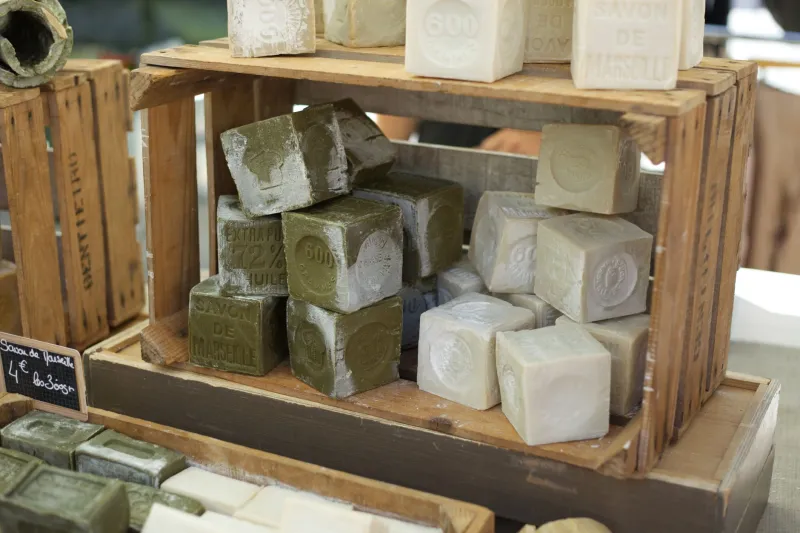
But here's the cool part: some oils actually improve with age. Castile soap — made primarily from olive oil — is a classic example. Fresh castile bars can feel a little slimy and soft. Give them a year or two to cure, and they firm up beautifully, lather more consistently, and feel noticeably better on skin. Soapmakers have known this for centuries. There's a reason aged soap has a reputation.
Bars made with more stable oils, like coconut or palm, tend to hold up extremely well over time without much change at all. High-oleic oils (like sunflower or avocado) fall somewhere in the middle — lovely for skin, but a bit more prone to oxidation if not stored carefully.
Storage Is Everything
The single biggest factor in how long your handmade bar stays in great condition isn't the formula — it's where you keep it.
Keep it cool and dry. Heat and humidity are the enemies of soap longevity. A bathroom cabinet is generally fine, but leaving bars in a steamy shower environment when they're not in use will shorten their life significantly. If you've got bars you're "saving," store them in a cool, dark drawer or closet.
Let it breathe. Soap needs airflow. Wrapping bars too tightly in plastic traps moisture and can actually encourage rancidity. If your soap came in a paper or cardboard wrapper, that's intentional — it lets the bar breathe while still protecting it.
Keep it away from direct sunlight. UV exposure can break down natural colorants and speed up oxidation in the oils. A windowsill display might look beautiful, but it's not doing your soap any favors.
Rotate your stash. If you've got a collection going, use the oldest bars first. This is especially true for bars made with floral or citrus essential oils, which tend to fade faster than earthy or resinous scents like cedarwood or patchouli.
Signs a Bar Has Actually Turned
Okay, so when should you toss a bar? There are a few clear signals:
- Rancid smell. If it smells like old cooking oil, crayons, or something just generally unpleasant, the oils have oxidized. It won't hurt you, but it's not going to be a pleasant experience.
- Orange or brown spots (DOS). These are the visual sign of rancidity. A few tiny spots aren't necessarily a dealbreaker, but widespread spotting means the bar is past its prime.
- Mold. This is rare in properly made soap, but it can happen if a bar was stored in an extremely humid environment or if the water content was too high during production. Mold looks fuzzy — you'll know it when you see it. Toss it.
- Significant fragrance loss. If a bar has lost its scent entirely and you've had it for a couple of years, it's still technically usable — just less enjoyable.
Notice what's not on that list: a date on a package.
The Case for Buying Ahead (And Why We Love It)
One underrated perk of artisan soap's generous shelf life is that it makes stocking up a genuinely smart move. When you find a formula you love — or a limited seasonal scent that's only around for a few weeks — grabbing a few bars and storing them properly means you'll have your favorite on hand for a year or more.
It also means handmade soap makes a legitimately practical gift. Unlike a bouquet of flowers or a perishable treat, a beautiful bar of soap from a small maker like Alada Soap isn't going to go bad on someone's shelf. It'll be there when they're ready for it.
The Bottom Line
Handmade soap doesn't expire the way a carton of milk does. It changes over time — sometimes for the better, occasionally for the worse — and the biggest influences on that process are what it's made with and how it's stored. A "best by" date tells you very little about the actual quality of a handmade bar.
Trust your senses more than any label. If it smells good, looks clean, and lathers up the way it should, that bar is doing just fine. And if you're ever unsure, the team at Alada Soap is always happy to help you figure it out — because good soap deserves to be used, not second-guessed.