What's Really Happening When Your Soap Lathers — And How to Get More Out of Every Bar

There's something deeply satisfying about working up a rich, creamy lather. It signals cleanliness, feels luxurious against your skin, and honestly — it just makes a shower feel complete. But here's the thing most people don't realize: that lather isn't just about the soap. It's a collaboration between your bar, your water, your hands, and even the temperature in your bathroom.
At Alada Soap, we think about this stuff a lot. When we're crafting a small-batch bar, we're not just thinking about how it smells or what it looks like sitting pretty on a shelf. We're thinking about how it performs in the real world — in your shower, with your water, in your climate. So let's break it all down.
Why Lather Is More Than Just Bubbles
Lather forms when soap molecules — which have one water-loving end and one oil-loving end — trap air while being agitated with water. The resulting foam lifts dirt, oil, and impurities off your skin so they can be rinsed away. Simple enough, right?
But the quality of that lather matters. There's a big difference between thin, watery bubbles that disappear in seconds and a dense, cushiony foam that stays put and actually does the work. For your skin, good lather means better ingredient contact time, more effective cleansing, and less need to scrub hard (which can damage your skin barrier).
Handmade soap formulations are built around specific oils and butters that contribute different lather characteristics. Coconut oil is a classic lather booster — it creates big, fluffy bubbles quickly. Castor oil acts almost like a lather stabilizer, helping foam stick around longer. Olive oil, shea butter, and cocoa butter bring richness and a creamy quality to the lather, even if they don't produce as many bubbles on their own. A well-balanced bar brings all of these together.
The Water Problem Nobody Talks About Enough
Here's where things get interesting — and where a lot of people get frustrated without knowing why. If you've ever traveled somewhere and noticed your soap performing completely differently than it does at home, you've already experienced the water effect firsthand.
Around 85% of American homes have hard water, meaning the water supply contains elevated levels of minerals like calcium and magnesium. These minerals are harmless to drink, but they interfere with soap's ability to lather. The calcium and magnesium ions essentially compete with the soap molecules, binding to them before they can do their job. The result? Less lather, more residue, and that annoying film that can make your skin feel tight or dull after a shower.
Soft water — common in parts of the Pacific Northwest and some regions of the Southeast — has the opposite effect. Soap lathers almost too easily in soft water, which sounds great but can make rinsing tricky and leave a slippery feeling on skin.
What you can do about it:
- If you have hard water, try using a soft washcloth or loofah to agitate the soap rather than just rubbing the bar directly on your skin. More mechanical action helps compensate for mineral interference.
- A water softening shower filter (widely available at home improvement stores) can make a noticeable difference in how your soap performs day to day.
- Handmade soaps with higher coconut oil content tend to hold up better in hard water conditions — something worth keeping in mind when you're browsing bars.
Temperature Changes Everything
Your shower temperature isn't just about comfort — it actively shapes how your soap behaves.
Warm water opens your pores and softens the surface of your skin, which allows soap to interact more effectively with oils and debris. It also reduces water surface tension slightly, which helps lather form more freely. This is why most people naturally get better lather in a warm shower than when washing hands under cold tap water.
That said, very hot water can actually work against you. Extremely high temperatures can cause the natural glycerin in handmade soap to become overly soft and dissolve faster than necessary — both on your skin and on the bar itself. You lose product more quickly, and the lather can become thinner and less structured.
The sweet spot for most people is a comfortably warm shower — not scalding, not lukewarm. Around 98–105°F is generally considered ideal for both skin health and soap performance. If you're someone who loves a hot shower, try turning it down just slightly during the lathering phase, then adjusting back for the rinse.
Technique: The Part We All Skip
How you apply your soap matters more than you'd think. There are a few approaches, and each has its place.
Direct bar application — rubbing the bar directly on your skin — is fast and simple, but it's not always the most efficient. In hard water especially, you may go through a bar faster this way without getting maximum lather.
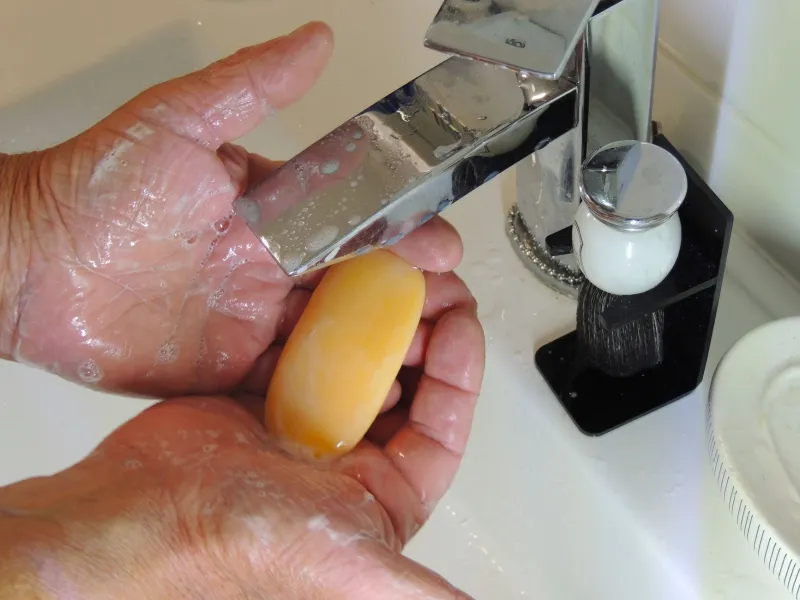
Working lather in your hands first gives you more control. Wet your hands, rub the bar between your palms for several seconds, then apply the foam to your body. This method tends to produce a richer, more consistent lather and uses less soap overall.
Using a washcloth, mesh pouf, or natural loofah dramatically amplifies lather by creating more surface area and agitation. A dry washcloth works especially well — wet it slightly, rub the bar across the cloth, then work it into a foam before applying. This approach is particularly helpful in hard water areas and gives you a gentle exfoliating effect as a bonus.
For our handmade bars, we generally recommend the hands-first or cloth method. Our formulas are designed to deliver their full range of skin-nourishing ingredients through the lather itself, so giving that foam time to develop and linger on your skin — even just for 30 to 60 seconds before rinsing — makes a real difference.
So What Does 'Good Lather' Actually Look Like?
This is worth addressing directly, because social media has done a number on our expectations here. Those avalanches of foam you see in commercials? Often achieved with synthetic detergents and foaming agents that have nothing to do with actual cleansing quality.
For a natural, handmade soap, good lather is:
- Creamy and consistent, not watery or instantly disappearing
- Comfortable on skin — no stinging, tightening, or stripping sensation
- Rinses cleanly, leaving skin feeling soft rather than filmy or squeaky-tight
- Fragrant throughout the wash, since lather carries the essential oils and botanicals in the bar
A bar that produces modest but lasting, skin-loving foam will outperform a high-sudsing bar that strips your moisture barrier every single time.
Work With Your Water, Not Against It
The bottom line? Your perfect shower experience isn't just about finding the right soap — it's about understanding the full picture. Knowing your water type, dialing in your temperature, and using a technique that works for your setup can transform an ordinary bar into something that truly performs.
We craft every Alada Soap bar with real-world conditions in mind, balancing oils for both lather quality and skin nourishment. Because a great bar of soap should work for you — wherever you are, whatever's coming out of your faucet.