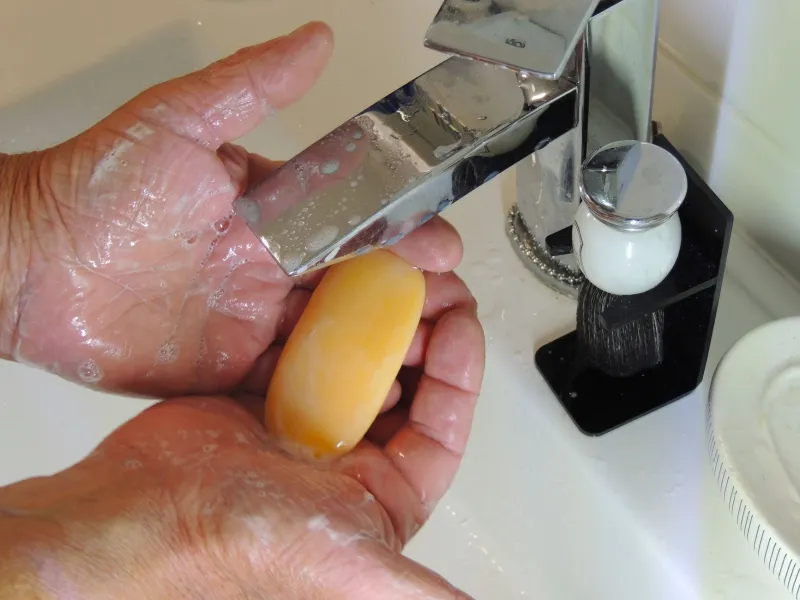
Your Skin Is a Living Ecosystem — Here's How the Wrong Soap Throws It Off Balance

Imagine your skin as a thriving neighborhood. There are residents — billions of them — going about their business every single day, keeping things stable, protecting the borders, and making sure troublemakers don't move in. Now imagine someone comes in every morning with a power washer and flattens the whole block. That's essentially what harsh commercial soaps do to your skin microbiome.
It sounds dramatic. But dermatologists and microbiologists are increasingly paying attention to what happens at the surface level of our skin, and what they're finding is reshaping how we think about cleansing entirely.
What Even Is the Skin Microbiome?
Your skin microbiome is the vast, diverse community of bacteria, fungi, and other microorganisms that live on and within your skin. These aren't germs you need to scrub away — they're partners. Researchers have identified over a thousand different bacterial species living on human skin, and the balance among them plays a direct role in everything from how well your skin barrier holds moisture to how effectively your immune system responds to threats.
Certain strains, like Staphylococcus epidermidis, actively produce antimicrobial compounds that fight off harmful pathogens. Others help regulate inflammation and maintain the slightly acidic environment your skin needs to function properly. When this community is in balance, your skin looks and feels its best. When it's disrupted — well, that's when things start to go sideways.
Dryness, irritation, breakouts, eczema flares, and even premature aging have all been linked in emerging research to a disrupted skin microbiome. The science is still evolving, but the directional finding is clear: a healthy skin ecosystem matters enormously.
How Commercial Soaps Disrupt the Balance
Most conventional bar soaps and body washes are formulated to be deeply alkaline — often with a pH hovering between 9 and 11. Your skin's natural surface, by contrast, sits at a mildly acidic pH of around 4.5 to 5.5. That difference isn't trivial. It's the difference between a neighborhood that's hospitable to beneficial microbes and one that's actively hostile to them.
When you lather up with a high-pH cleanser, you're not just washing away dirt and dead skin cells. You're temporarily neutralizing the acid mantle — that invisible protective film made up of sebum, sweat, and the byproducts of your resident microbes. Strip it away repeatedly, and the beneficial bacteria that thrive in acidic conditions have a much harder time bouncing back.
Add synthetic detergents (often listed as sodium lauryl sulfate or sodium laureth sulfate) into the mix, and the disruption compounds. These surfactants are highly effective at cutting through oil and grime, but they don't discriminate. They pull away the natural lipids that feed your beneficial microbes and reinforce your skin barrier in the same stroke.
The result? Skin that feels squeaky clean in the short term but ends up drier, more reactive, and more vulnerable over time.
What Handmade Soap Does Differently
This is where the chemistry of handcrafted soap starts to look really interesting. Traditional cold-process soap — the kind made in small batches with carefully selected oils and butters — is a genuinely different animal from its mass-produced counterparts.
For starters, the saponification process (the chemical reaction that turns oils into soap) naturally produces glycerin as a byproduct. Industrial manufacturers typically extract that glycerin and sell it separately. Handmade soap keeps it right there in the bar, where it acts as a humectant, drawing moisture to the skin and helping maintain the conditions beneficial microbes need to thrive.
The base oils matter too. Ingredients like olive oil, coconut oil, and shea butter each bring their own fatty acid profiles to the final bar, influencing how gently or thoroughly the soap cleanses. A well-formulated handmade bar can lift away impurities without stripping the skin bare — leaving enough of the lipid layer intact that your microbiome has a fighting chance to stay in balance.
And then there are the add-ins that forward-thinking soap makers are incorporating specifically with skin ecology in mind.
Ingredients That Support Rather Than Sabotage
A growing number of artisan soap makers are formulating with the microbiome conversation front and center. A few ingredients worth knowing:
Prebiotic-rich botanicals — Ingredients like oat extract and honey contain compounds that selectively feed beneficial bacteria, helping them outcompete harmful strains. Think of them as fertilizer for the good guys.
Kaolin and bentonite clays — These gentle clays draw out impurities through adsorption rather than aggressive chemical stripping, making them a smarter choice for those who want a deep clean without the collateral damage.
Aloe vera — Beyond its well-known soothing properties, aloe contains polysaccharides that may help support the integrity of the skin barrier, giving your resident microbes a more stable environment to call home.
Neem and turmeric — Both have been used in traditional skincare for centuries, and modern research is beginning to validate their role in supporting balanced skin flora without wiping the slate clean.
Unrefined plant butters — Mango butter, cocoa butter, and similar ingredients are rich in skin-identical lipids that reinforce the barrier layer and provide the kind of nourishment that synthetic emollients can't quite replicate.
At Alada Soap, the philosophy of pure ingredients, handcrafted with love isn't just a tagline — it's a commitment to formulating with your skin's full biology in mind, not just the surface-level clean.
Small Habits That Make a Big Difference
Switching your soap is a meaningful step, but a few complementary habits can amplify the benefit:
- Rinse with lukewarm water rather than hot. High temperatures accelerate the breakdown of the acid mantle and can stress your skin's microbial community.
- Pat dry instead of rubbing. Vigorous toweling disrupts the surface environment your microbes are trying to reestablish after a wash.
- Give your skin time to breathe. If you can wait even ten minutes after cleansing before applying other products, you give your microbiome a head start in restoring balance.
- Be consistent. Switching between a gentle handmade soap and a harsh drugstore cleanser when you run out defeats the purpose. Your microbiome thrives on stability.
The Bigger Picture
There's a broader cultural shift happening in how Americans think about hygiene. For decades, the goal was to be as clean as possible — to eliminate bacteria wherever they lived. But the science of the microbiome (gut, skin, and otherwise) is quietly rewriting that narrative. Not all bacteria are the enemy. In fact, many of them are the reason we stay healthy in the first place.
Your soap is one of the most frequent touchpoints between you and your skin's ecosystem. Choosing one that works with your biology rather than against it isn't a luxury or a wellness trend — it's just good sense.
The bars on your shelf should be cleaning you, not depleting you. And now that you know the difference, it's a lot easier to choose accordingly.